Friday, 13 October 2023

Eyeless in Gaza - Scattered Thoughts on the Present Crisis


I. The State of Israel may be about to commit grave crimes against humanity - ethnic cleansing or genocide - against the people of Gaza.   Warnings about this terrible and apocalyptic prospect come from sources as various as Jewish Voice for Peace, the American Middle East news site Mondoweiss, and the respected Palestinian politician Mustafa Bargouthi. 

Here is the account of the Gaza Strip given by the renowned Israeli human rights organisation, B'Tselem.  This is not up-to-the-minute, but gives essential background:


And here is a video lecture by Sara Roy, a brilliant scholar of Gaza:


(220) Gaza: When is life grievable? Personal reflections on decades of research in Palestine by Sara Roy - YouTube


Here is Dutch scholar Sai Englert on the impending threat of genocide:  

Sai Englert, Impending Genocide — Sidecar (newleftreview.org)


II.  Irish politicians and commentators, and politicians and commentators everywhere, keep on talking about Israel's 'right to defend itself', but committing crimes against humanity against the civilian population of a territory of which Israel is the occupier is not a mode of self-defence.


III. Irish politicians and commentators, and politicians and commentators everywhere, keep on talking about Israel's 'right to defend itself', but they very rarely talk about the right of the Palestinians to self-determination,  and the right of an occupied population to resistance, including armed resistance.


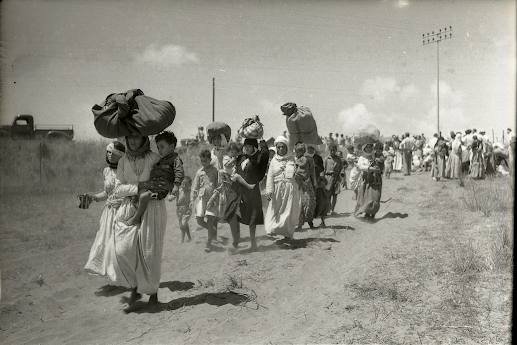
IV.   Many commentators make much of Hamas, according to its charter, being 'sworn to Israel's destruction', as a BBC website puts it.   There are a couple of things to say about this.  First, while it is true that Hamas sees Israel and Zionism as its enemy, it must be recognised that it has done very little to achieve this alleged aim.  This is because it is incapable of doing much, militarily, to achieve this aim.   Hamas's Izz ad-Din al-Qassam Brigades constitute a popular resistance militia, or 'terrorist group'.   But nothing in this formation's military capacity could bring about Israel's demise.   On the other hand, while Israel may not be 'sworn to destroy' the Palestinian people', in some explicitly articulated doctrine, its very presence and juridical being is predicated on exclusion of non-Jews, who are, in practical terms, Palestinian Arabs.  Further, it is equipped with every modern weapon which such a task might require, and it has done a very great deal to scatter, dispossess, expel, break and destroy the Palestinian people, from 1947 to this day.   What is more important - a political-ideological document, or the 'facts on the ground'?   The facts on the ground suggest that Israeli policy is driven by the intention to ruin the Palestinian nation in every way possible - political and military but also economic, cultural, legal and social.   This is what should be our focus, not the Hamas charter.


V. In Terrorism and the Ethics of War (2010), Stephen Nathanson argues that condemnation of terrorism is really only credible when combined with sincere. unbiased and consistent opposition to the targeting of the innocent, no matter the identity of the killers or the victims, and no matter the cause.   This puts most of the condemnation of Hamas we've been hearing or reading in the non-credible category.


VI. Those who demand of Palestine activists that before any other discussion of the Gaza crisis can take place, they condemn Hamas, need to be challenged as to their adhering to the tenets in V above.  Where were these blowhards, when the opportunity was presented to condemn the treatment of Gaza over the last 15 years?   Where were these blowhards when Israelis murdered or lynched hundreds of Palestinians in the last year?    The fact is that the display of moral outrage comes very cheap, and it is always more about virtue signalling and anti-intellectual self-pleasuring than any real thought or understanding.  It nearly always is unrelated to a real connection to the people or situation in whose interest it is apparently deployed - indeed, it stands in for and occludes such a connection.


VII.   Defenders of Israel who ask Palestine activists not to endlessly have recourse to the past to justify their positions need to cop themselves on and remember the Holocaust.


VIII. Liberals who tell us that violence is committed by 'both sides' need to remember that what we are observing in reality is a rich first-world state, with an economy predicated on advanced technology, with one of the most formidable military apparatuses in the world, which is armed with unacknowledged nuclear weapons, crushing a people without a state, without a standing army or airforce or navy, a people impoverished, scattered and abused, denied most of its rights, dispossessed of its homeland, and armed only with rifles, shoulder-held grenade-launchers and crude unguided rockets of the most limited effectiveness.  The 'conflict' is not one of equals, and never has been.   As Frantz Fanon once suggested, the native knows that liberal Western 'objectivity' will always be used against him.


IX.   In the actions it has taken since the weekend, and in the actions it seems about to take, Israel has enjoyed almost total support from 'the international community' - that is, from the United States and its European allies, including Britain, Germany and France.  If ethnic cleansing or genocide are committed by Israel, those other countries will be complicit in these crimes against humanity.  


X.   Israel removed its illegal settlements from Gaza in 2005, in a unilateral 'disengagement' plan led by Ariel Sharon's government.   But Israel has constructed a security fence around the entire Strip (other than along the Egyptian border), and it controls the airspace and the coastline.  Israel controls all food supplies, medical supplies, fuel, and electricity for Gaza.  Dov Weisglass, a former adviser to the Israeli government, suggested in 2006 of the regulation of produce allowed into Gaza that 'the idea is to put the Palestinians on a diet, but not to make them die of hunger'.   An Israeli report, compiled in 2008, but repressed by the government until 2012,  revealed that calculations had been made of the calorific intake Gazans needed to avoid starvation and malnutrition.    Yet Israel, precisely because of this extraordinary amount of control of the Strip, and in spite of the 'disengagement', remains in international law the occupying power.  An occupying power has, in fact, a duty of care to the civilian population under its control.   Reducing that population to a condition of 'bare life', in Giorgio Agamben's famous term, is a crime against humanity.


XI.  Returning to VI. above, when challenged to 'condemn Hamas', one needs to pause and think.  What exactly is at stake in such a demand?  What lies behind it?  What does the person making the demand hope to achieve by it?    It seems to me to be a very particular kind of rhetorical-ideological manoeuvre.   Firstly, in any discussion or debate, to make a forcible demand of one's interlocutor is to demand control of the discussion.   Second, it is implicit in the demand that the person to whom it is made will be reduced, weakened, arm-twisted, by both the request and the problem of reacting to it, whether or not a 'condemnation' is issued.  Third, the language of 'condemnation' is a moral or ethical language, not a political language, and so the demand seeks to shift the ground of discussion from politics to morality.  Fourth, the demand is present-ist: it seeks to strip a concrete human and political situation of any of the wider frameworks which help to constitute that situation.  Implicit in the demand is the idea that trying to think or learn any kind of background or context, any kind of establishing historical narrative, is irrelevant or even, of course, immoral.   To talk of the past or of context is, apparently, to indulge in 'whataboutery', or, as the historians call it, counterfactual speculation.  The point, though, is that one party to a purported discussion, in issuing the demand to 'condemn Hamas', is arrogating to themselves the right to police that discussion.  And it is incorrect to suggest that seeking knowledge about an action amounts to justifying that action - indeed, a proper 'condemnation' of an action requires a full understanding of what that action was and where it came from.

The overall conclusion one comes to, then, is that the demand to 'condemn Hamas' is more a matter of form than of content.   The claim of the person making the demand to be concerned about the situation in Israel or the situation in Gaza, is fictional.   The demand is made as a debating point; it is not made from or even seeking to take up, a coherent moral position.   The demand should, therefore, be refused.


Here is Judith Butler, in the London Review of Books, saying similar things to me, but saying them better:


The Compass of Mourning


And Frédéric Lordon, also:


Conor


Monday, 25 September 2023

"What is critical consciousness, if not an unstoppable predilection for alternatives?" - Remembering Edward Said

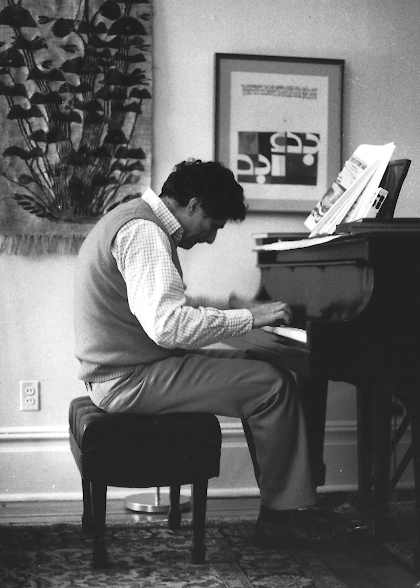
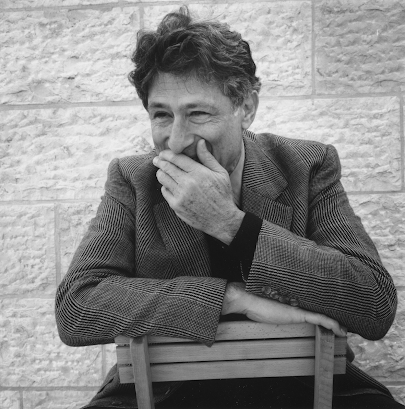
Twenty years ago today, Edward Said finally succumbed to the leukaemia he had so bravely battled for the previous decade.     His early death - he was only 67 - was greeted with sadness and dismay by his allies and friends, and no doubt with a grim glee by his enemies.   I can still remember getting the news by phone from a scholar friend, and feeling that the world would never be quite the same again.

I've spent much of my adult life reading Said, and, I hope, learning from him.  I first became aware of him as a third year undergraduate, when I heard about this book of his called Orientalism, which was represented to me as the greatest Foucauldian book by someone other than Foucault.    This was long before the internet or Amazon or other modes of rapid access to books, and my first copy of Orientalism was brought to me by a friend and former teacher from Minneapolis.   Now I would say that Orientalism is only superficially a Foucauldian book, but one's knowledge - one's critical consciousness - has to begin somewhere.


A year or so later, I took a Master's degree at University College Dublin, and began to read Said properly.   I was very fortunate that teaching me on that MA programme was a trio of brilliant and important scholars - Seamus Deane, Declan Kiberd and Thomas Docherty - who took criticism very seriously, and who thought with rigour and intelligence about what it meant to be, or to try to be, an intellectual.   Not merely this but Deane and Kiberd had been crucial to the mediation into Irish literary studies of what we then called 'postcolonial theory': Kiberd, after all, had invited Said to the Yeats Summer School in 1986, and Deane had published the resulting talk as a Field Day pamphlet in 1988.  In those days, this 'theory' mostly consisted still in the work of Said and Spivak and Bhabha - postcolonial studies was still something relatively new and radical in the Irish academy and it was not yet a full orthodoxy elsewhere in the Anglophone world.    I gravitated to Said most of all - not only because his writing, while never simplistic, avoided the extraordinary obscurantism and neologisms with which the Indian critics larded their discourse, but I also was excited by the sense that, of the three, Said was most clearly an intellectual, an activist-writer who reached and addressed much wider audiences than those of the seminar room.

I read Orientalism with Kiberd, and immediately was compelled by it - the erudition, the wonderful readings it contains (those of French writers such as Nerval and Lamartine and Flaubert in particular), its polemical verve and urgency.  I could see, too, how the discourse of 'Orientalism' could be compared fruitfully to that of 'Celticism': that body of colonial themes and ideas which suffused much writing in and about Ireland in the nineteenth century, and which could be politicized by English figures such as Arnold and Froude, and their Irish antagonists such as Yeats and Synge.   

But I also independently was reading the book which I now consider superior to Orientalism, and to be  Said's masterpiece: The World, the Text, and the Critic.   The World, as I'll call it, is a collection of essays Said published between 1969 and 1982, and it's mostly concerned with the politics of intellectuals in the academy.     If Orientalism's scandalous success was partly attributable to its steely intervention in the realm of European and American ideas and policy in the Middle East, The World turned its critical weapons on Said's own institution - the university and the discourse of critique.   Part of what was so exciting about these essays - 'Roads Taken and Not Taken in Contemporary Criticism', 'Travelling Theory', 'Reflections on American "Left" Literary Criticism' - was that Said could write convincingly about the then-new and vogue-ish poststructuralist scholars in the ascendant in America and Britain - Foucault, Derrida, Lacan, Barthes - while showing himself to be equally comfortable with the themes and  ideas of the New Criticism and, even more, the great tradition of Romance philology, whose legatee he could justly claim to be. This was the world of Leo Spitzer, Erich Auerbach, Karl Vossler and Ernst Robert Curtius, extraordinary scholars who helped in the early twentieth-century to invent modern comparative literature.   Furtheremore, Said was also imbued with ideas taken from the greatest names of Western Marxism - Lukács and Gramsci - and these in particular helped him work out his devastating readings of the ever-widening gulf between the radical rhetoric of the 'New New Criticism', and its actual and dreary institutionalization and self-reification in journals, curricula, conferences and departments.   Said could notice all of this, and call powerfully for what he called a 'worldly' criticism, which was, and is, a criticism which is aware of the relationship between the classroom and the street, and seeks to bridge it and analyze it.   


I should admit that it took me a while to grasp fully the implications of this work of Said's, and that I initially read him in a rather instrumental and callow way - when I wanted to investigate Foucault's ideas but recoiled from the difficulty of some of his texts, I turned to Said for a handy gloss.   When I wanted to understand Gramsci, I turned to Said for a handy gloss.  I would find my interest in cultural geography fired up by his spatialized criticism in Culture and Imperialism, and my reading of Adorno was stimulated by his lucid readings of the Western classical music tradition in Musical Elaborations.   Later, of course, I came to realise that Said was always a heterodox Foucauldian, that his geography was insufficiently grounded in the material realities of capital, that his reading of Adorno was arguably incomplete.  But I always went back to Said's work and read it again, each time learning a little more, each time maybe understanding it a bit more, and gradually allowing it its own integrity and heuristic power.   Said was berated so often by putative allies for being insufficiently Foucauldian or Marxist or, indeed, humanistic, that one came to long for due attention to be paid to the constructive and innovative and effective things he did and thought with Foucault or Lukács or Adorno or Auerbach, and his capacity to conjugate them together.   Equally peculiarly, such critique still continues in some quarters, making one wonder just what is at stake in such repetitive polemics.  Somehow, Said's putatively sympathetic critics need at once to possess him and to renounce and apparently transcend him and his work.  

I became familiar with some of the developing literature about Said's work.  I learned from Abdirahman Hussein's splendid reading of the whole oeuvre.  I thrilled to Paul Bové's appropriation of Said in his magnificent Intellectuals in Power.   I winced at Aijaz Ahmad's withering and doctrinaire critique in In Theory.   It dawned on me that Said was, in fact, not a Marxist or a post-structuralist - he'd never toe the line that Ahmad demanded or that Robert Young demanded.   Rather, Said was a radicalized humanist, who had realised with Gaston Bachelard that a humanism that did not press itself up to its own limits was not worthy of the name.   


It took me a while to read Said's first book, on a writer who obsessed him throughout his life, and who happens to be one of my own favourites - Joseph Conrad.   It took me a while, too, to read Said on Palestine: I read the literary criticism long before I read After the Last Sky or The Question of Palestine.     I realised immediately, though, how he had brilliantly deployed the weapons he'd acquired as a critic in his political writing - 'Zionism from the Standpoint of its  Victims', a major chapter of The Question of Palestine, has to be one of the most impressive instances of the 'worldly' criticism Said advocated so passionately.  

Timothy Brennan's biography of Said, Places of Mind, portrayed a fiercely engaged and active life.    Reception of the book has not been without controversy - with such a subject, how could it be otherwise? - but I enjoyed it very much.   I might have wished for a little more of the private man - someone who clearly lived, felt, acted, argued so intensely, right up to his very last hours, could only be fascinating and intriguing.  I myself met Said on a few occasions but could not properly claim to be a friend of his.    But his brilliance, warmth, and, in spite of the big ego, his interest in the people around him, no matter their high prestige or complete lack of importance - these were immediately obvious, and wonderful and admirable traits.    The world is, as many said at the time of Said's death, a quieter, dimmer, less interesting place without him.   

For a while after the death, I wondered what we, what I, could do without Said in the world.   And then, with colleagues and friends, and with all due modesty, I realised that the best way to honour his memory was to try to do similar or proximate or affiliated work, and to try to think my way to my own positions as he, autodidact in the style of Vico that he was, had sought to do.


To help with the task of remembering Said today, I am posting five pieces here.  Two are my own - my review of Tim Brennan's biography, in the Dublin Review of Books, and an essay commissioned by Dan Finn at Jacobin on Said's worldly intellectual performance.    The third article is the excellent and intelligent review of Places of Mind in the Boston Review, by Esmat Elhalaby.   The last two articles are the wonderful and heartfelt obituaries by Alexander Cockburn at CounterPunch (which never fails to make me emotional), and Michael Wood at the London Review of Books.  


My DRB review of Places of Mind

Intellectual Insurrection


My Jacobin essay:

Edward Said Showed Intellectuals How to Bring Politics to Their Work


Elhalaby's review of Places of Mind:


The World of Edward Said


Michael Wood at the LRB:


And Alex Cockburn at Counterpunch:


Conor


Thursday, 24 August 2023

"Discipline In War Counts More Than Fury" - Learning From Victory at Maynooth

On Tuesday morning, the Governing Authority of Maynooth University met in emergency session, to discuss its planned change in the way staff members of GA are to be chosen, from election (which has been the status quo) to selection by private consultants.  This plan was a tributary outcome of the Government's 2022 Higher Education Authority Act, which shrinks 'governing authorities' to a maximum headcount of 19, and fixes a permanent non-university majority of members at 10.  Faced with a letter from the Irish Federation of University Teachers rejecting this measure out of hand, with letters from international scholars in support of their Maynooth colleagues, and with the results of a petition organised by IFUT which had accumulated over 1160 signatures in a couple of weeks, GA voted to accept the current arrangement, to reject a 'hybrid' model which had been proposed (three to be elected, two selected), and to reverse its original proposal for the selection of all five members.


This victory has been achieved by the redoubtable and brave work of the IFUT Maynooth local, by IFUT staff and members more generally and by the support of a large network of Irish and international scholars and other persons interested in the future of Maynooth, of higher education in Ireland, and indeed of higher education and academic freedom everywhere.   


A victory, yes, but while one wishes to see the University work harmoniously after a period of tension, we who have fought for this achievement must not drop our guard.  We must never underestimate the forces arrayed against us.   Those forces will rally and return.   The victory achieved is one which does not wipe away many other problems at Maynooth or at Irish universities generally - commercialisation, the whole vacuous rhetoric of 'excellence', the mushrooming of often unaccountable management, the hegemonic re-purposing and use of 'radical' ideas and language to achieve undemocratic and empty ends ('equality, diversity and inclusiveness', top-down, management-led 'decolonisation' of curricula, the by-passing of departmental and disciplinary structures and democratic forms by the creation of 'schools', and much more).


We in Maynooth are deeply grateful to our comrades in Ireland and abroad for their support.    But we also have much to learn, as we strategize for the struggle which undoubtedly will continue.   We have much to learn from the crisis of public universities in the United States and from the struggles produced by the British Brown Report 'reforms'.     Even as we in Maynooth celebrate a victory today, Brighton University's management is seeking to eviscerate many of that institution's programmes and is cutting staff by 10%.   Compulsory redundancies wantonly axe careers, destroy departments, and wreck the learning opportunities of students.    All of these tactics may yet come to Maynooth.   


There will be much talk in Maynooth about the need now to put aside differences and work in the belief that 'we' all have the University's interests at heart.  But we do not all have the same interests at heart.   Management is concerned with students, teaching, and research only as 'inputs' and 'outcomes'.  It is in the thrall of a profoundly reified conception of learning and pedagogy.   It has no sense of the intellectual vocation, of the value of critique and dissent, and of education as a public good.


Maynooth staff and students have achieved a fine victory.  But we must remember that the moment of victory is that of the preparation for the next war, and we must plan accordingly.


Conor

Tuesday, 22 August 2023

The Future Will Only Contain What We Put Into It Now - the Maynooth crisis continues


Aontacht is the website of Irish Student Left Online.    Aontacht is a non-sectarian media collective of left-populist character, which seeks to challenge Irish society from the viewpoint of political parties, trades unions, tenants' organisations, student groups and workers' interest groups. It welcomes contributions, video and media contributions coming from a revolutionary socialist perspective.

Maynooth activists Steph Collins and Naoise McManus have published an extremely valuable article on the Maynooth crisis.  Collins and McManus are socialists and both are members of Students For Change at Maynooth.   Their article brilliantly outlines not only the current constitutional crisis at Maynooth - epitomized by the drive to appoint staff members to Governing Authority by private selection, rather than by democratic election - but offers a deeper history of the rise of neoliberal managerialism at Maynooth.   They also offer important background on the recently appointed President of Maynooth University, who is clearly the crucial and most ruthless driver of this process and of the wider process now underway of the bureaucratisation and commercialisation of Maynooth.  

Here is Steph and Naoise's superb article: 

Maynooth University “Systematically Excludes” Staff From Key Decisions in Trend Towards Commercialisation


It Is Forbidden To Forbid

Part of what is most sad and unfortunate, as well as infuriating and frustrating, about this current situation is that there are plainly staff - senior and maybe not so senior - at Maynooth University who consider that a good sharp dose of neoliberalism and the 'New Public Management' is what Maynooth 'needs'.  Otherwise, the current increasingly authoritarian and aggressive - and deeply anti-intellectual and anti-pedagogical - regime would never have been set up, the current spate of largely untransparent and barely accountable senior managerial appointments would not be taking place, and the bizarre and Orwellian 'Strategic Plan' would not have been created largely over the heads of staff, students and their contributions.


Students often have a much clearer and more profound sense of what the commercialisation of higher education looks and feels like than their teachers and supervisors.    Academics should listen, and co-operate with their student comrades.   We have universities, education and the future to protect.


Conor


Thursday, 3 August 2023

The Wolf at the Door - Democracy Threatened at Maynooth University

Comrades -

For a long time, it seemed that Maynooth University enjoyed a degree of shelter from the chill winds of managerialism and commercialism which have eviscerated so much of what is good in the British and American university systems.   In truth, various pressures have been encroaching on Maynooth, its staff, its students, its facilities, for a couple of decades but these things were hidden or cushioned by the expansion created in the Celtic Tiger years.   Now, especially in the wake of the global pandemic, there is no mistaking the threats.   A beast approaches.    


The beast comes in various forms.  It comes in the form of an ever-greater stress on digital and electronic education, modes of teaching, learning and teaching environments.   It comes in the form of a highly aggressive top-down managerial style which the senior administration is content to deploy in all interactions with staff.   And it comes in the form of the cynical corruption and arrogant avoidance of Maynooth's legally constituted systems of governance by that senior administration.    

The immediate context is current government legislation, promulgated by Simon Harris, Minister for Higher Education, which seeks, inter alia, to shrink the 'governing authorities' of Irish universities, and to fix a structural majority on those governing authorities of non-university members.  In Maynooth specifically, the situation is massively worsened by the existing administration which wishes to abolish the electoral process by which staff have hitherto democratically chosen the university representatives on Governing Authority.   Staff members are instead to be selected by (no doubt handsomely paid and utterly unnecessary) outside private consultants.    

What the senior administration of Maynooth University is doing,  in pushing forward this harshly anti-democratic policy, is destroying one of the fundamental pillars of what constitutes Maynooth University and any proper university.   That pillar  is the principle of self-governance.   The original medieval universities were groups of scholars, with collective legal rights protected by charter, and independent of both secular and ecclesiastical power.   This too is the root of academic freedom - in 1155, the University of Bologna issued its Constitutio Habita, which guaranteed a scholar unimpeded passage in the interests of scholarship and pedagogy.    The senior administration of Maynooth is tearing up these rights, and is casually and ignorantly gutting the institution's status as a university.    Maynooth is well advanced on the road to being what Bill Readings called a 'university in ruins'.


Here is a superb blogpost by my comrade and friend, and the Head of the Maynooth English Department, Conrad Brunstrom, on this crisis: 


Representative Governance at Maynooth. Please read and sign.


Conrad urges readers to sign the petition organised in defence of Maynooth's vestiges of democratic self-governance.   Here is the link to the petition.  Please sign it and please pass it on as widely as possible.   


https://my.uplift.ie/petitions/defend-democracy-at-maynooth-university


Conor

Sunday, 30 July 2023

The Wars on Palestine

 Some years ago, at a conference on Palestine at Columbia University in Manhattan, through my friend Bashir Abu-Manneh, I met the leading Palestinian historian now active.    Rashid Khalidi, the holder of the Edward Said Chair of Modern Arab Studies at Columbia, is a powerhouse of scholarship, courage and intellectual energy.    At the end-of-conference party where Bashir introduced us, Rashid told me of his interest in Ireland and Irish history.    And indeed the parallels and connections between Ireland and Palestine are striking: shared histories of British control, of partition, of forms of colonialism.   Shared histories, also, of late-colonial war and of dissent.   These connections have been studied by writers as different as Conor Cruise O'Brien, Ian Lustick and Joe Cleary.   The recent death of former Lord Mayor of Dublin Ben Briscoe reminds us that Irish political sympathies have not always run in favour of the Palestinians - Briscoe's father presided over the visit to Dublin in the 1930s of Vladimir Jabotinsky, the brilliant intellectual father of Revisionist (rightwing) Zionism, who came to meet De Valera.   


These various links and points of comparison have received thus far piecemeal scholarly treatment.   But Rashid Khalidi is intent on giving them extended attention.  On several visits to Dublin - one last year as a visiting fellow at Trinity College's Long Room Hub - he has set himself the task of getting into the necessary archival research to push forward this project.   

Khalidi was in Dublin again last May, and we organised for him to speak at Maynooth University.    His chosen topic was 'The Hundred Years War on Palestine'.   This is the title of his 2020 book, a very fine history of the attacks on Palestine which began with the Balfour Declaration of 1917.   

Introducing Rashid to a Maynooth audience on May 22 last, I felt it was impossible not to mention the fact that we were meeting only 8 days after the date of the 'Declaration of Independence' of Israel, and in the broader historical context of the commemoration of the Nakba, which really began in March 1948.   Indeed, I noted, May 22 was the 75th anniversary of the Tantura massacre, when up to 200 Palestinian civilians were murdered by members of the Alexandroni Brigade of the Haganah at a village south of Haifa.  


Rashid gave a wide-ranging talk, summarizing his book but ranging beyond it and bringing his analysis of the continuing war on Palestine up to date.   Stressing the fact that Zionism needs to be understood as a settler-colonial project, and not just a Jewish nationalism, and stressing also the continuous, direct and crucial involvement of the great powers in the assault on Palestine from 1917 to the present, the talk offered a superb capsule account of the situation in Palestine and of the potential for resistance.

I have written a short essay recounting Rashid's talk, for the Dublin Review of Books.  My warm thanks are due to Maurice Earls for making this possible, and also I am indebted to Eve Patten of Trinity College Dublin, who hosted Rashid's visits to Trinity.  And of course I am indebted to Rashid for his combination of grit and intelligence.

Here is the DRB article:  

The Wars on Palestine


Conor

Sunday, 2 July 2023

Shit Hits Fans - RTE finally collapses under the weight of its own contradictions

 In the last week, RTE, the Irish national broadcaster, has imploded in public in the most spectacular manner.   Revelations of secret payments to its 'top' 'star' presenter, the inexplicable and irritating Ryan Tubridy, have peeled open a wider process of corruption and incompetence in governance, programme making, contracts, treatment of most employees, use of public funding and so on.    Hopefully, at least, Tubridy is gone forever - bad cess to him.   Other 'stars' - the equally inexplicable and loathsome Joe Duffy (to think that such a conservative old fart could be let loose making programmes about James Connolly is to encounter the moral idiocy of much RTE thinking), the competent Claire Byrne, the middle-aged animate Barbie that is Miriam 'Genuinely' O'Callaghan, the loutish and greasy-haired Brendan O'Connor - have all made self-regarding and self-exculpating statements about their bloated and unjustified salaries.  Even worse but entirely characteristically, they have been allowed at least in Duffy's and Byrne's cases to use their programmes as platforms to make such statements, in ghastly displays of lachrymose narcissism.    What an enormous fuck-up.

Nothing is worse than someone saying 'I told you so'. I am not a media scholar or expert.    I am not saying 'I told you so'.   But, in 2014 and in 2019, I wrote two blog pieces on RTE radio which I think touch on a couple of the issues now suffering the glaring examination of the Irish public.    The first of these pieces has always been the most-read article on this blog.   Both articles are now, of course, dated, but the points they make may still have some value.


Why RTE Radio 1 Is So Awful


(first published in June 2014)
I am a habitual, and at times avid, radio listener. I have no television.  I grew up without one, and while I've lived at certain phases of my life with a TV in my home, I am much happier without one.  Putting the matter baldly, on the basis of what I hear talked of, and from the occasional perusal of published schedules, I am fairly convinced that most TV is rubbish: the enormous amount of propaganda/tabloid news, endless sports coverage, live shows, game shows - all of this mulch seems to me to outweigh the good things on television: the occasional good investigative programme, the occasional good film, the occasional good wildlife or nature documentary.  My fear with TV is partly, of course, that it caters to my worst, laziest, most vulnerable susceptibilities - television catches its watcher at his weakest, demands his total attention, and wastes his time.  I would be worried if I had a television that I'd spend a lot of time watching precisely the garbage I have listed above, always in the endlessly-deferred hope that I might come upon an instance of the better programming content.  I'd never read anything again, and, the Lord knows, I am a slow enough, and inefficient enough, reader as things stand.

But I do listen to the radio. I have a radio in several rooms of my apartment.  I wake up with the radio.  I listen to it as I drive.  I cook or clean my flat (not frequently enough, admittedly)  to the strains of the radio.  At least I can do that.  Of course, it must be admitted immediately that I am still listening to a rather narrow range of channels, and I don't make much effort to discriminate or plan my listening.  So I mostly end up listening to daytime 'talk radio': here in Dublin, for me, this means RTE Radio 1, and Newstalk106.  It's about RTE Radio 1 that I wish to write here.

RTE is a small national broadcaster in a small country.  It has never adopted whole-heartedly the Reithian model of its huge and powerful neighbour and rival, the BBC.  I presume the assumption has always been made by Irish governments that the Irish population's license fee payments were never going to be enough to pay for the funding of an 'adequate' service on their own.  Consequently, RTE's radio and TV activities are funded by a mixture of the license fee, and advertising on both radio and television.  And consequently the chances of RTE ever finding space for a television channel like the old BBC 2 - which when I was a child in the Seventies was a by-word for good arts coverage, interesting film programming, thoughtful drama, and educational programming linked to the often-superb Open University - were always slim.  RTE does have a music station which might be said to model itself to some degree on BBC Radio 3, though one old friend has suggested that the apt comparison is to Classic FM.  This is RTE Lyric.  Lyric, however, suffers from some of the problems I am going to list in regard to RTE Radio 1 below.

RTE Radio 1 ought to be the Irish equivalent of BBC Radio 4, which must still be one of the best talk-radio stations in the world.  It's not that I believe everything that the BBC news services tell me: I don't, of course.   But Radio 4 makes great efforts to cover news issues with serious depth and sometimes with real rigour.  It features higher-brow discussion programmes covering the arts and the intellectual world, such as Andrew Marr's 'Start the Week', and Melvyn Bragg's 'In Our Time'.  It features a good deal of literature read on air, fiction or non-fiction.  It features regular drama, as well as its very own soap, the eternal Archers.  Unfortunately, running with the BBC analogy, RTE Radio 1 is more like an unhappy composite of BBC Radio 4 and Radio 2.  Even during the 'Tiger' years, when advertising funding was not hard to come by, RTE Radio 1 had become ever-more conservative, limited, homogenous, and the crash has only accentuated those tendencies.  I am going to proceed here through the elements of this radio station which I think are execrable.  Some of these will seem trivial: so be it.

RTE, as a colleague pointed out to me a few years ago, no longer makes radio programmes.  All radio is live, or is recorded and presented as if in one take.  The vast bulk of programming is in what I will call 'magazine' format, where there is a single anchor, who introduces topics, interviews persons who appear on the programme, and in a sense regulates the whole production, albeit with the unheard input of a producer.  Radio 1 starts off with an early morning light music programme, 'Risin' Time'.  That dropped 'g' is enough to wake me up shouting at the radio already.  Then we have a two hour news programme, Morning Ireland.  This is followed by John Murray's 'light' magazine, and then Sean O'Rourke's 'news' magazine.  Then we have another light music programme with Ronan Collins.  Then  we get one of the worst programmes in the entire schedule, Liveline, with Joe Duffy.  Last week, when airtravel to parts of Europe was affected by a strike by French air-traffic controllers, at least three days were given on this programme to various non-entities moaning and blathering about the immensity of their suffering while waiting two hours at Charles de Gaulle, all encouraged by the lugubrious Duffy, a bloated overpaid excuse for the popular touch. Then at 3pm, we have Derek Mooney's light afternoon magazine, given to hyperventilation about how one can win 'Mooney's Money', and, given  Mooney's background with a short and sweet nature programme some years ago, sometimes lightened by the adventures of an enterprising hedgehog or two.  Hedgehogs have more charisma than Mary Wilson, who presents Drivetime, a news magazine until 6.30.  We then have a sports magazine.  And then there follows an arts programme, Arena, presented by Sean Rocks, which gives every appearance of being a live magazine. This programme recently established its cultural credentials very firmly by reporting at some several minutes' length on the death of Peaches Geldof, an unhappy and uninteresting celebrity, while missing the death of Peter Matthiessen, a major American writer of the last 50 years.   At 8.30pm, we have a slightly more interesting light music programme, presented mostly by John Creedon.  At 10pm on 3 days a week in the political season (that is, when the Houses of the Oireachtas are in session), there is something called 'The Late Debate', which is always announced, portentously, as coming to us from 'RTE News and Current Affairs' - as if that made any difference.  In summertime, this slot is filled by repeats, when RTE joyfully tells us that we now have 'another chance to listen to' a programme we wish we'd never heard in the first place.  Then we get a late sports report, a reading from a book 'of the week', and we go to a late-night light music programme, presented on weekdays by Alf McCarthy, (possessor of one of the most grating accents, and one of the irritatingly ingratiating manners, on Irish radio) and on weekends, by Lillian Smyth.

And that's how it is, five days a week, Monday to Friday, every day.  Weekends are not much better; at this time of year, they are often worse.  Saturdays and Sundays start with a kind of graveyard shift, of programmes that might have some individual character but low listenership: a rural news magazine called 'Countrywide' on Saturday mornings, followed by a 'playback' selection of the week's listening (whose function seems mostly to be to display how uninteresting much of the week's broadcasting has been).  On Sunday mornings, we get a set of (actually pre-recorded) pieces, 'World Report' at 8am (the very location of this programme in the schedules is final confirmation, if any were needed, that RTE's news and cultural horizons are grossly foreshortened), followed at 8.30 by John Bowman's selection from RTE's archives, and then at 9am, 'Sunday Miscellany' - a venerable programme whose name goes to point up the  fact that the content of the entire schedule is eclectic to the point of incoherence.  On Saturdays at 10am, we get a business news magazine, 'The Business', now presented by Richard Curran.  On Sundays, we get a magazine/chat programme at that time presented by Miriam O'Callaghan.  At 11am on both Saturdays and Sundays, we get 'Marian Finucane', another live magazine, which covers both serious and trivial matters.  On Saturdays in the political season, we get 'Saturday with Claire Byrne', a roundtable discussion.   On Sundays, we get 'This Week', one of the better news programmes, with prerecorded interviews, and relatively in-depth treatment of news stories.   On Saturday and Sunday afternoons, we get long live sports coverage programmes.  Exorbitantly, on Saturdays in high summer when the GAA championships are in train, 'Saturday Sport' may run from 2pm until 9pm, blotting out much of one of the two remaining spaces for programmes of any particular character or slightly narrower interest.  For the fact is that it is only on Saturday and Sunday nights that one finds anything like 'niche' or properly interested specific radio programmes - coverage of books and book reviews, a programme on history, and Donncha O Dulaing's extraordinary time-warp programme from a pre-Lemass Ireland (I see now that O'Dulaing is not presenting his programme at the moment, and if he has quit altogether - he has been ill in recent times - an epoch will have passed in Irish broadcasting.  His programmes (most famously Highways and Byways, back in the 1970s) were notable chiefly for their attempts at audio-sepia, but he also has one of the nicest and most euphonious voices on Irish radio, and he'll be missed).  Other matters on Saturday and Sunday evenings include a programme specializing in live ceilidh music, RTE's one drama-per-week, and Philip King's excellent selection of popular and folk music, albeit presented in a rather ludicrously precious and hushed manner.  Such programmes all can be swept away, in the earlier part of Saturday evenings, by the apparently intensely-felt need for the entire nation to listen to some middle-grade football or hurling game.

And that's it.  There are many many faults with this set-up.  Where to begin?

When her weekend radio programmes were being instituted, I heard Marian Finucane saying on the radio that listeners had been saying that they wanted the weekends to be more like the weekdays, in regard to listening.  Well, these listeners must be happy in their benighted condition, because that is what they got.  RTE Radio 1 is characterised overall and specifically by an extraordinary blandness and homogeneity of style, tone, vocabulary, programming technique and structure, ideological positioning, cultural vision.  It is resolutely middle-brow, middle-of-the-road, inoffensive, largely uninteresting, unimaginative, without depth or heft, without context, mostly without thought.   It's like Weetabix - it fills up a lot of space but is almost weightless.   RTE Radio 1: Reader's Digest radio at its best or worst.

The sameness comes primarily from the magazine format.  The magazine format has certain advantages: it is flexible (it can cut to breaking news immediately), it is omniverous (it can tackle light and heavy issues).  But, being live, it is also constructed on the cusp of the moment, its time for preparation is minimal, its time for thought or the canvassing of a range of ideas or opinions is almost non-existent, and it seems to conduce to the production of 'stars' - 'Marian', 'Joe', 'Sean', 'Mooney', 'Gerry' and 'Gaybo'.  Even now, after the crash, these stars are mostly grossly over-paid - the idea that Joe Duffy is paid several hundred thousand euros per annum for his purportedly sympathetic grunts and moans down the phone to his interlocutors is peculiarly offensive.  Old age has revealed Gay Byrne to be a pompous and condescending stuffed shirt, and with the benefit of hindsight I can now see that, presenting the 'Late Late Show', he must have been one of the most conservative laureates of 'the Sixties' in any country anywhere.  Gerry Ryan was his successor, and his broadcasting persona - at once warm, funny, crass, capable of both delicate interview and rampaging vulgarity - was only matched in its homologous relationship to the excesses of Celtic Tiger Ireland by the ghastly manner of the unfortunate man's sudden end.

The extraordinarily narrow range of opinion on RTE Radio 1 is most obvious on programmes like Marian Finucane's Sunday morning discussion of the newspapers.  Apart from the fact that creating a programme which is largely parasitic on another media form is itself indicative of the braindead nature of RTE broadcasting, one notes the same people turning up again, and again, and again.  Figures such as the Russian neoliberal economist, Constantin Gurdjiev, or Ken Murphy of the Law Society, or David Horgan of Petrol Resources could make a living from whatever their fees from RTE are, alone.  The typical selection of people consists of a Gurdjiev or Horgan, a political correspondent, a TD (sometimes a Minister), and one other person who may be well-known from some civil society activity.  And this pattern of selection will appear on other programmes: on Sean O'Rourke's 'Gathering' on Fridays (now apparently an institution in itself and referred to as if with a capital 'g'), on 'Saturday with Claire Byrne' and on 'The Late Debate' - same people, same kinds of people, same pattern, perennially the same discussion.

One's discontent with this format is only enhanced when one realises that a great deal of the discussion that takes place is essentially ill-informed or only partially-informed bar-stool banter.  Ludicrous ideologues such as former Fine Gael Wicklow councilor Susan Philips, who has made a whole new career out of Islamophobia and wannabe-neoconservative attitudinizing, or Hazhir Teimourian, a Kurdish journalist of perfervidly pro-Western tendencies, are brought blandly onto RTE Radio 1 as 'Middle East experts', without a scintilla of critical inspection.  Or we often get Declan Power, a deeply conservative 'security analyist', whose background is never given but whose opinions are accepted by RTE anchors with dumbstruck deference.  The idea that these programmes lead to great rigour of discussion and penetrating insight - if it applies in RTE's thinking at all - is sadly mistaken.

But the extraordinary centrism of opinion is also evident.  Leftwing voices get very little space.  Admittedly, Ireland does not have that many leftwing journalists or academics, but a few exist: they are canvassed for opinion on such programmes only infrequently.  This is most evident in the way that economists working for companies or corporations working in the financial sector - Jim Power, of FriendsFirst is a good example - are wheeled on for commentary, without much thought that their ideas might come with a particular angle. This paucity of properly radical or imaginative economic analysis on RTE means that the station did not cover itself in any great interpretative glory during the financial crash.  Individual figures such as George Lee were well aware of the problems in the Irish economy and in the state's finances, and issued warnings, but would never have offered an analysis or policy prognosis other than that of austerity.  This means that RTE is mostly a vehicle for versions of neoliberal TINAism - 'There is no alternative'.  There's none coming out of Montrose, to be sure, but then one remembers that RTE tends to think that south Dublin is the centre of the universe.

The sheer vapidity of much of this programming is evident in much more trivial ways, also.  The poverty of thought in regard to programme names, for example: 'The John Murray Show', 'The Ronan Collins Show', 'The Mooney Show', 'The Book Show', 'The History Show', 'The Miriam O'Callaghan Show', 'The Marian Finucane Show'.  Endless 'shows' hung around and predicated on a 'personality'.   This latter might be acceptable if the 'personality' was interesting or fertile or productive - perhaps in the manner that for a few years Vincent Browne was.  But most RTE presenters seem to come from the same bland stable, while also being encouraged, by the very format in which they are working, to see themselves as 'stars' or celebrities, the kind of people who were paid large sums in the Tiger years to allow themselves fake-tanned reification in magazines like VIP.

RTE Radio 1 documentaries - 'The Doc on One': RTE occasionally strives for a cool or streetwise tone, and usually ends up sounding ridiculous - are limited also.  Most obviously, they seem to get no funding at all, and therefore programmes commonly seem to consist of one man or woman with a tape recorder, who interviews a number of people on some human interest topic, and splices the interviews together to produce a pre-recorded 'documentary'.   But the programme's pre-recorded nature seems to have little influence on the ideas or thought of such broadcasts, seems not to induce the documentary makers to bring in other opinion on the given topic or event. The idea of using the documentary form to explore social or political issues in a structural manner, or to explore any content of faintly intellectual interest, seems to be largely absent.  Such programmes, then, are 'documentaries' only in the thinnest and most basic sense.

RTE Radio 1 seems to shelter some truly extraordinary and often repellent accents.  Mostly, these accents are those of female broadcasters and journalists: Emma McNamara (a business correspondent who must be able to boast the most attenuated 'o' on the Irish airwaves), Kate Egan (an over-elocuted newsreader), and brassy-voiced veterans such as Miriam O'Callaghan and Keelin Shanley.  This is leaving aside the ghastly mixture of Dublin 4 and 'DART' accents on display on 'AA Roadwatch', a non-RTE production of news information on commuting, which wins all the prizes for the ugliest, most ungrammatical, inaccurate speech discourse on Irish radio.    Endlessly, everyday, we are told about 'delays southbound on the M1', for example, as if the Belfast to Dublin highway were populated by mobile impedimenta of some sort; or that 'things are heavy both ways' on the Blackrock to Merrion Gates main road into south Dublin.  Endlessly, placenames are mispronounced - my pet hate is the way that AA Roadwatch seems to think that Foster Avenue in South Dublin is in fact 'Foster's Avenue', as if Dublin streetnames were in the gift of Australian brewing companies.  It is 'things' of this sort that account for the damage to my smallest radio, which routinely gets knocked off my desk or kitchen counter when I am getting mad as hell and don't want to take any more.

A reader here may say, reasonably enough, Well, Conor, why don't you just turn the radio off?  And indeed I could do that.  But I like listening, and soon I am going to be paying for this sort of muck, whether my radio is on or off.  Minister (hopefully soon to be ex-Minister) Pat Rabbitte will shortly bring in a replacement for the Television License (which infuriating advertisements on radio currently tell me 'makes quality programming possible').  This charge will be applied to every householder in the state, on the basis that with computers, iphones and other forms of media technology I could be watching RTE television (even if I am not and never want to).  In other words, the current government is planning effectively to license all media-capable technologies.  It's in this light, that this current angry screed is justified.


Why RTE Radio 1 Is More Awful Than Ever


(published in May 2019)
Five years ago, I wrote a blogpost entitled 'Why RTE Radio 1 Is So Awful'.   It has been, by a long way, the most read post on this blog, outdistancing any musings on books or inflammatory writings about Palestine.  Even the bots of the Donbas or West Virginia seem to enjoy it.  Here it is:


Since then, I have not stopped listening to Radio 1.  I switch back and forth between it and Newstalk106.  Both stations annoy me, but it's RTE Radio 1 which benefits from the license fee which I have not as yet paid - not possessing a TV - but which, no doubt, I soon will have to pay, just to guard against the outside possibility that I'd someday be stupid enough to want to watch 'The Late Late Show' on the smartphone I don't have.  Because Radio 1 stands as the 'radio station of record' of Ireland, in the manner of the Irish Times in the print media, I resent its dreary and often asinine character.

My irritable and scornful analysis of Radio 1 still has currency.  It probably says a lot that the station's character has not changed one iota since April 2014.  Some presenters have gone, some new ones have arrived.  None are, of themselves, worth listening to.  Some, by virtue of the extraordinarily fixed pattern of the station's schedule, acquire or have acquired 'importance'.  None of them deserve it.

For my money, the only broadcaster worth making an effort to listen to in Ireland these days is Sean Moncrieff, who presents an afternoon programme on Newstalk, Monday to Friday, between 2pm and 4pm.  Moncrieff, with a background in stand-up comedy and a training in philosophy, manages to present a programme which steers between those poles, often to striking effect.  He can be drily, or vulgarly, funny.  He clearly improvises at least part of his spiel.  He has real range in his interviews, which mostly tend towards the light, but not always.  Moncrieff can cut to the heart of a topic, be it a serious cultural matter or some scrap from popular news, with a combination of steeliness and sympathy, which leaves most of his competitors standing.  He is (of course) supported by an able and creative production team, but this does not take away from his own wit, articulacy and mental agility.  He is vastly more interesting to listen to than Ray Darcy, his rival in the same slot on RTE Radio 1, and he's vastly more interesting than most of his Newstalk colleagues - the callous Paul Williams, the breathlessly conceited Pat Kenny, the crassly philistine Ivan Yates who seems never to have advanced in his capacity for speech beyond the Terrible Twos, or the bizarrely-accented Susan Cahill, who gushes in the same way over various writers every Sunday.

But RTE Radio 1 has no one of Moncrieff's wit, insight or sure touch.   RTE Radio 1 is stale.  As a friend pointed out to me a while ago, the problem with Marian Finucane is that she is getting old, and her programme and its arrangement are getting old.  In fact they were all old when the damn progamme was created.   The whole RTE Radio 1 structure is old, and it needs a kick in the arse.  Alas, when you produce, or collude in the production of, 'star' presenters, such people then expand to fill the fetishized space that has been allotted to them.  It's beyond comprehension that RTE (or anywhere else) would pay a superannuated fogey like Ryan Tubridy nearly half a million euros per annum to do the 'work' he does.  I don't understand or see his 'talent'.  His voice is hard to bear, his wit is flat, and his morning radio programme is almost entirely without interest.

I feel sorry in summertime for Dave Fanning - a major Irish broadcaster, with substantial cultural achievements to his name in the promotion and development of rock music (even if I differ with him about U2) - who often 'stands in for Ryan', while 'Ryan' takes the long holidays written into his disgraceful contract.  Years ago, someone said that the two best Irish radio broadcasters were Fanning, and Tommy O'Brien.  They both had very distinctive voices and fields of interest and expertise.  Fanning still has these things; O'Brien, sadly, died in 1988.  Fanning who has a very distinctive radio voice, radio patter, and angle on the world, is much much better than Tubridy, but presumably has not been able to negotiate the kind of ludicrous contract with RTE that the younger and less talented man has, and so he takes gigs like this one.  

Tommy O'Brien was the kind of real original figure which RTE now almost entirely lacks.  He owned a huge collection of records of classical music, particularly grand opera, and he presented a weekly radio programme on Radio 1, always opened with his greeting 'Good evenin', listeners', in a strong south Tipp accent.  He possessed great knowledge, was passionate about his subject, but was entirely lacking in pretension.   Not everyone might agree with his taste, but his extraordinary individuality was undeniable.  Compared to him, a Tubridy is merely a buffoon, and a Cathal Murray is a soogey-moogey saccharine dummy who would make watching a game of tiddly-winks seem exciting.

Tubridy's 'talent', as I say, is lost on me.  I don't see what he brings to his programmes that a smart young journalist, well trained in radio and with an able production team, could not do for a tenth of the cost.  RTE tells us that if it doesn't pay bloated marionettes like Tubridy or Finucane or Miriam 'Genewwwwoyyynely' O'Callaghan or Joe Duffy commensurately bloated pay packets, it will 'lose' them.  Well and good.   Fine.  So be it - lose the lot of them, and give us radio with some content, and less of the faux charisma which is the real content of so much of the drivel we are asked to listen to.

The same vapidity pertains to programme content, as ever.  Now that we are moving towards the summer season, the 10pm slot on Tuesdays, Wednesdays and Thursdays on Radio 1 is vulnerable to even more dross than usual. We have had in recent times a gamut of female journalists anchoring 'The Late Debate' - the typically useless RTE magazine with a few talking heads.  We now have repeats on three successive nights of 50 years of 'Sunday Miscellany'.  'Sunday Miscellany' is a vintage programme, but it is hardly the kind of totem of Western civilization which RTE plainly thinks it is.  It does not warrant repeats - five decades of middlebrow ruminations do not bear much repetition.  And, to add insult to injury, we are always told we are being 'given another chance' to listen to these programmes, as if we are unregenerate brats who are resistant to the dreary nostrums of our elders and betters and now are being given one last chance to simper properly and suck it all up.   If this is what RTE thinks of its listeners, then it really is on its last legs.

Conor